Executive function is the management layer, not the intelligence layer
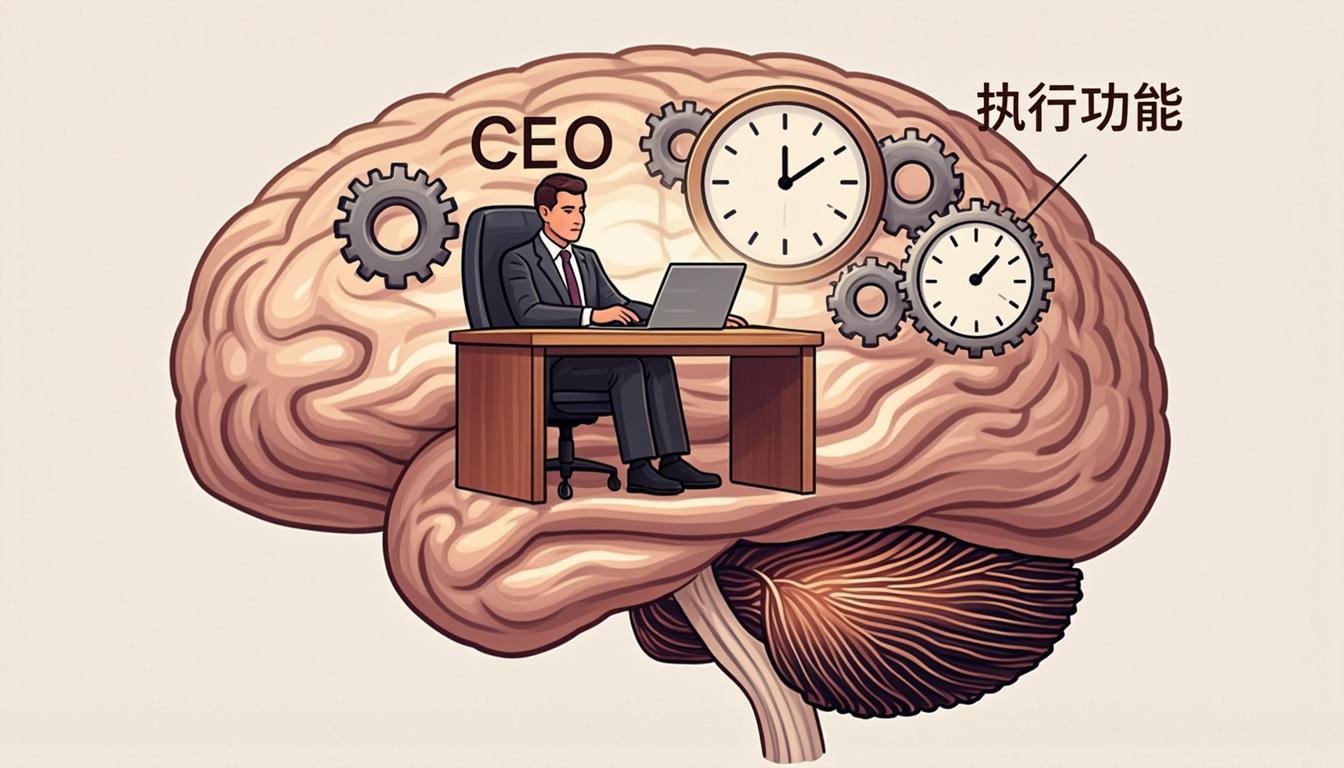
Executive function is the set of processes that help you plan, initiate, organize, remember, prioritize, shift, and complete. It is the management layer of cognition. You can be highly intelligent and still have weak executive function. In fact, many bright people experience exactly that mismatch and spend years being misunderstood because others assume high intelligence should automatically produce orderly execution.
This misunderstanding damages self-trust. A person can know what needs to be done, care deeply about it, and still struggle to begin. They can understand the strategy and still fail at sequencing. They can be motivated and still have a nervous system that does not activate reliably until the deadline becomes painful.
That is why executive function needs to be separated from character. It explains why two equally capable people can have radically different relationships to time, planning, paperwork, task switching, and follow-through. The difference is often regulatory, not moral.
The core components people usually feel first
Task initiation is often the most visible component. This is the ability to start without waiting for crisis, perfect mood, or external forcing. When initiation is weak, even simple tasks can feel heavy at the threshold. The person is not confused about what to do. They are blocked at the moment of entry.
Working memory is another key piece. This is the mental space used to hold information while doing something with it. When working memory is under strain, people lose track of steps, forget what they were doing midstream, or drop important details unless they are written down outside the mind.
Planning and prioritization matter too. Some people can see the goal clearly but not the sequence. Others struggle to estimate time accurately, which creates chronic underplanning, lateness, or unrealistic workload commitments. These are not random flaws. They are common executive-function patterns.
Why some people only activate under urgency
A large number of people with inconsistent executive function become highly productive only when the stakes become immediate. Urgency floods the system with enough activation to override avoidance, indecision, and initiation drag. From the outside, this can look like procrastination followed by a miraculous sprint. On the inside, it often feels like needing pain or panic to access normal output.
This pattern is effective in the short term but expensive over time. It trains the nervous system to associate movement with crisis. It also makes it hard to build calm consistency because ordinary importance does not generate enough activation to begin. The person may know a task matters deeply but still fail to start because the system does not yet feel an emergency.
The answer is not shame. The answer is better activation design. Smaller entry points, body doubling, external timing, public deadlines, reduced startup friction, and environmental cues can all create movement before the crisis stage arrives.
Why high standards can make executive function worse
Many people with executive challenges do not suffer from low standards. They suffer from standards that are so high the start point becomes psychologically expensive. If the task must be done brilliantly, in full, with no mistakes, then beginning feels risky. The initiation barrier becomes even larger.
This is why productivity advice built around discipline alone often fails. The problem is not only “do the task.” The problem is “help the nervous system believe it can survive beginning imperfectly.” Once that happens, completion becomes much more realistic.
In practice, this means defining the smallest credible version of the task, separating drafting from polishing, and building systems that reward motion before excellence. Quality still matters. It just cannot be the price of entry.
Executive function at work and in teams
At work, executive differences show up in project pacing, follow-up quality, note-taking, meeting recall, deadline reliability, and how people manage complex requests. A strong executor may appear naturally responsible, while a weaker one may appear careless even when effort is high. Teams often interpret these differences morally because they do not understand the regulatory layer underneath them.
The best managers design supports instead of relying on irritation. Clear written next steps, visible deadlines, shared project boards, recurring check-ins, predictable meeting structures, and reduced ambiguity improve output for many people. These adjustments are not special treatment. They are often just competent management.
Executive diversity can also be complementary. People who are fast in crisis, strong in ideation, or excellent at adaptive problem-solving may still need partners who stabilize systems, sequencing, or long-range execution. Good teams make this explicit instead of pretending everyone should work the same way.
How to stop fighting yourself and build better systems
The most helpful shift is to stop asking only, “Why can’t I just do it?” and start asking, “What does my system need in order to begin and sustain?” That question produces better answers. Sometimes the issue is timing. Sometimes it is task ambiguity. Sometimes it is lack of visible structure. Sometimes it is environmental overload. Sometimes it is depleted sleep or stress load.
Once you know the pattern, you can intervene intelligently. Put memory outside your head. Lower activation cost. Break projects into first visible moves. Use body doubling. Create friction around distractions instead of relying on willpower. Schedule demanding work for the times your mind is naturally more alive.
Executive function becomes less mysterious when it is treated as a system problem. That does not remove responsibility. It makes responsibility more realistic. You still have to build the structures. But you stop wasting energy trying to win a regulatory problem through self-contempt alone.
The most useful shift: from guilt to design
People with executive friction often live under a background layer of guilt. They believe other people are simply doing adulthood correctly while they keep failing at basic management. That belief is corrosive because it makes every productivity problem feel like proof of inadequacy instead of evidence about how the system is currently built.
A better approach is to treat every recurring difficulty as diagnostic information. If deadlines are repeatedly missed, what part breaks first: initiation, sequencing, time estimation, distraction control, or follow-through? If email becomes unmanageable, is the issue volume, context switching, memory load, or lack of decision rules? When you can name the real failure point, you can build around it with much less wasted emotion.
This shift matters because shame rarely improves executive performance at scale. Design does. Externalized memory, visible priorities, low-friction start points, task decomposition, and realistic pacing all help convert self-knowledge into more stable results. The goal is not becoming a different kind of brain. The goal is building an environment your brain can actually work inside.
Executive function is also a support design question
One of the biggest mistakes organizations make is treating executive consistency as if it were purely a personal trait rather than partly a systems outcome. If a workplace runs on vague requests, shifting priorities, invisible deadlines, and constant interruption, it is actively manufacturing executive strain. People with naturally strong self-management may cope longer, but even they are paying a cost.
A better system reduces memory burden, makes next actions visible, and protects focused work. That kind of design does not only help people with obvious executive challenges. It improves performance across the board. This is one reason executive-function-aware management so often feels like good management in general: it respects how minds actually operate instead of pretending discipline alone should absorb every failure in the system.
Why executive function should change how you design your week
One practical mistake many people make is treating every hour of the week as if their brain will show up the same way inside it. In reality, executive function often has clear rhythms. Some people are strongest in the first focused block of the morning, others in the late afternoon once activation has built, and others only after a warm-up task helps the system cross the initiation threshold. A more intelligent schedule respects these patterns instead of pretending they do not exist.
That means important work should be matched to the conditions most likely to support it. Deep work belongs where energy, attention, and initiation are strongest. Administrative maintenance belongs where the cost of interruption is lower. Follow-up work, approvals, and routine processing should not be mixed blindly with the kind of cognitive work that needs continuity. People often think they have a discipline problem when the real issue is that they keep putting the wrong work into the wrong mental window.
The more honestly you map your executive rhythm, the less self-betrayal you build into the week. This is one of the clearest ways to turn abstract self-awareness into practical performance. You may not control every demand coming at you, but you can often control more of the sequencing than you think. That shift alone reduces the amount of work that feels artificially heavy.