Why team chemistry is not random
People often describe team chemistry as if it were mysterious. A group either clicks or it does not. In reality, team compatibility is usually patterned. It has to do with how people make decisions, how quickly they move, what kind of communication they trust, how they handle disagreement, and what conditions make them feel safe enough to contribute honestly.
That means compatibility is not the same as comfort. A team can feel easy because everyone thinks similarly, avoids tension, and moves at the same pace. But comfort does not always create performance. Some of the strongest teams are not frictionless. They are interpretable. Their members understand what each other is optimizing for, how each person behaves under pressure, and what kind of translation is needed when styles collide.
The job of personality insight in teams is not to eliminate difference. It is to make difference workable. Once patterns become legible, what looked like unpredictable chemistry often starts to look like a solvable coordination problem.
The difference between helpful diversity and chaotic mismatch
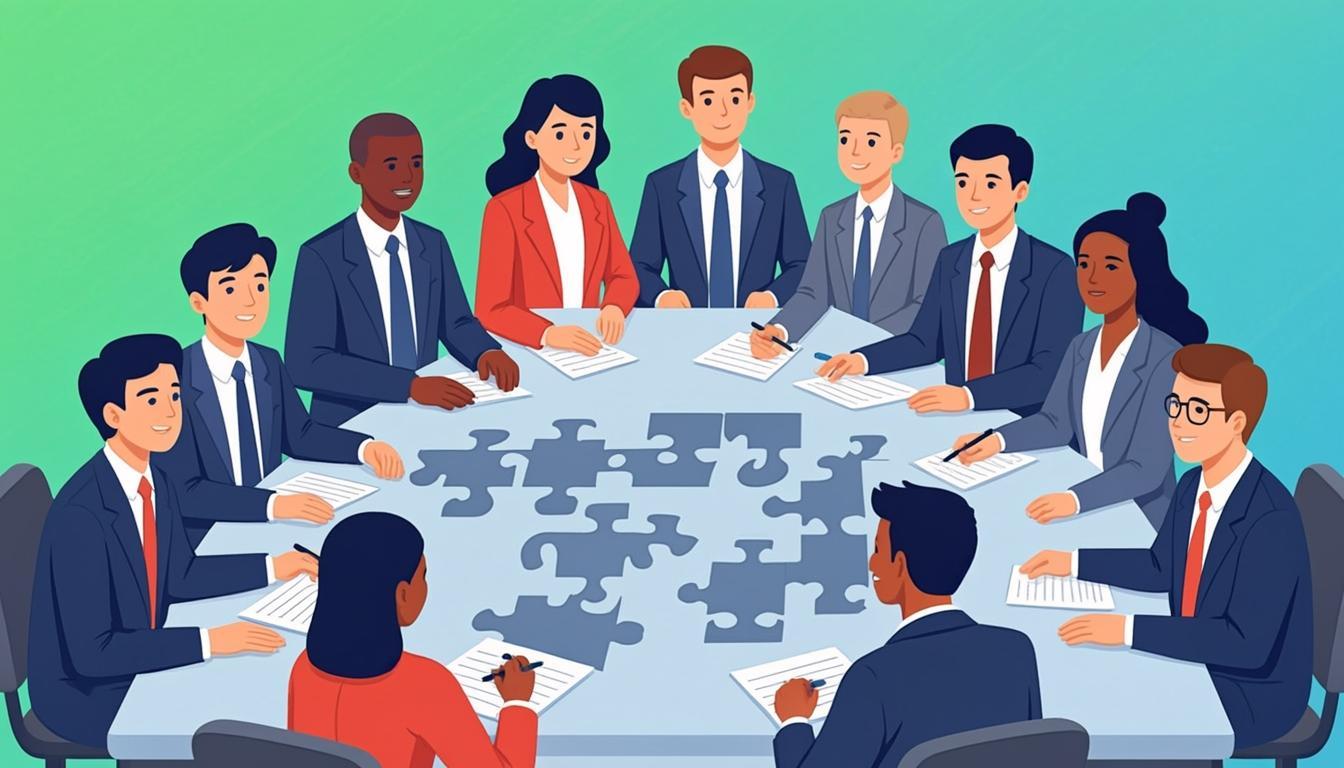
Diverse teams outperform homogeneous ones when the diversity is usable. If one person challenges assumptions, another sequences execution, another protects quality, and another lifts group energy, the team can cover more territory than a single style ever could. But if those differences are unmanaged, the same team can spiral into mutual irritation.
A Systems Challenger may push necessary truth before the Builder-General has enough stability to move. A Precision Alchemist may slow delivery to protect quality while a Strategic Driver experiences that as costly hesitation. A Voltage Catalyst may try to energize the room while a Pattern Oracle is still reading what is actually happening beneath the mood. None of these people is wrong by default. They are simply solving for different priorities.
Compatibility improves when the team explicitly names these patterns. It gets worse when every difference is moralized. High-functioning teams do not ask for sameness. They ask for mutual interpretability.
Communication style is often the hidden fault line
Many team problems start as communication pattern problems rather than strategic ones. Some people trust directness because it reduces ambiguity. Others trust tone and pacing because it preserves safety and signal. Some think out loud. Others think privately and speak once they have internal clarity. Some need the conceptual frame first. Others need the practical example first.
When teams do not understand these differences, they misread intent. Direct people are labeled aggressive. Reflective people are labeled disengaged. Warm communicators are seen as unclear. Structured communicators are seen as rigid. The friction becomes personal even when the real issue is style translation.
The fix is to create shared agreements: how decisions are made, how dissent is raised, how feedback is delivered, what counts as urgency, when to document, and how to escalate tension before it becomes political or resentful. Those agreements turn style difference into collaboration instead of drag.
Psychological safety and accountability must grow together
The strongest teams combine psychological safety with clarity of standards. Safety without accountability creates drift. Accountability without safety creates compliance theater. Team compatibility depends on balancing both.
This is why archetype diversity matters. Compassionate Gatekeepers often strengthen trust and fairness. Builder-Generals strengthen clarity and role legibility. Pattern Oracles improve judgment quality. Strategic Drivers protect velocity. Precision Alchemists protect finish. Voltage Catalysts restore morale and energy. Systems Challengers prevent stale assumptions from becoming policy. Adaptive Polymaths connect gaps across functions.
A team becomes resilient when these functions are present and respected. If one function dominates too strongly, the culture warps. Too much challenge with too little care creates defensiveness. Too much warmth with too little consequence creates softness and delay. Compatibility is the art of keeping the pattern balanced enough to perform.
Hiring for fit without hiring clones
One of the most common hiring mistakes is confusing fit with familiarity. Leaders often hire people who feel easy to interpret because they think similarly. That can create fast rapport but weak coverage. The team becomes increasingly blind in the same places.
A better approach is to hire for complementary fit. Ask what the team already has in abundance and what pattern is missing. If everyone is visionary but nobody builds systems, you may need a Builder-General more than another charismatic strategist. If everyone is hard-driving and execution-heavy, you may need more Pattern Oracle or Compassionate Gatekeeper energy to improve judgment and trust.
This is where personality assessment becomes strategically useful. Not as a replacement for skills, but as a way to understand what kind of human operating pattern will make the team more whole rather than more repetitive.
How to diagnose a team that keeps stalling or colliding
If a team keeps stalling, ask whether the problem is unclear ownership, low trust, decision avoidance, or missing complementary patterns. If the team keeps colliding, ask whether the issue is pacing, directness, standard-setting, or competing definitions of what good leadership looks like.
These are not abstract questions. They change interventions. A team that lacks challenge needs something different from a team that lacks containment. A team that avoids hard truth needs a different fix from one that tells too much truth without timing or care.
The fastest way to improve compatibility is to make hidden patterns explicit. Once people can name the style differences shaping work, they can stop personalizing every conflict and start redesigning how they operate together.
What strong leaders do with compatibility data
Strong leaders do not use personality insight as decoration. They use it to shape how work is distributed, how meetings are run, how conflict is interpreted, and where support is needed before performance drops. They notice who needs conceptual framing, who needs role clarity, who needs visible decision ownership, and who needs more psychological safety before they can challenge the room honestly.
They also understand that compatibility is dynamic. A team can feel highly compatible in early strategy work and much less compatible during late-stage execution. The same people may work beautifully together in ideation and collide badly under deadline pressure. That is not proof the team is broken. It is evidence that the leadership system needs to adapt the way the team operates across phases.
When leaders use compatibility data well, the team becomes more accurate about itself. People stop wasting time explaining the same friction over and over. Instead, they build agreements that match the actual personalities on the team. That is one of the clearest ways to turn personality insight into performance infrastructure.
Compatibility is a strategic advantage, not a soft metric
Organizations often measure output, deadlines, hiring, retention, and revenue while treating compatibility as a soft issue that will somehow sort itself out. That is usually a mistake. Team friction changes meeting quality, decision speed, psychological safety, role clarity, and execution risk. In other words, compatibility is upstream of many “hard” business outcomes leaders already care about.
Once a company understands this, it stops treating personality insight as a nice extra. It becomes part of how the organization thinks about leadership, communication norms, role fit, and team architecture. The result is not a perfectly harmonious company. The result is a more legible one, and legible teams usually solve conflict faster and perform with less hidden drag.
What compatibility data should change after the workshop ends
A lot of teams have a good offsite conversation about personality and then return to normal operations as if nothing practical needs to change. That wastes the insight. If compatibility data is real, it should influence role design, meeting structure, escalation paths, decision ownership, and how leaders pair people for different types of work. Otherwise the team has only become more self-aware in language, not more effective in practice.
For example, if a team knows one person needs conceptual framing before they can contribute well, important decisions should not be sprung on them with no preparation and then judged by how fast they react in the room. If another person is highly direct and fast-moving, feedback agreements should clarify how challenge is delivered so urgency does not degrade trust. If a third person is strong in quality detection but weaker in pace under chaos, they should be used earlier in the workflow rather than blamed at the end for slowing a broken system down.
This is what makes compatibility commercially useful. It stops being a conversation about personalities in the abstract and becomes a tool for reducing preventable friction. Teams that do this well rarely become tension-free. They become more strategically designed, and that matters much more than surface harmony when the work is serious.